The Importance of Story

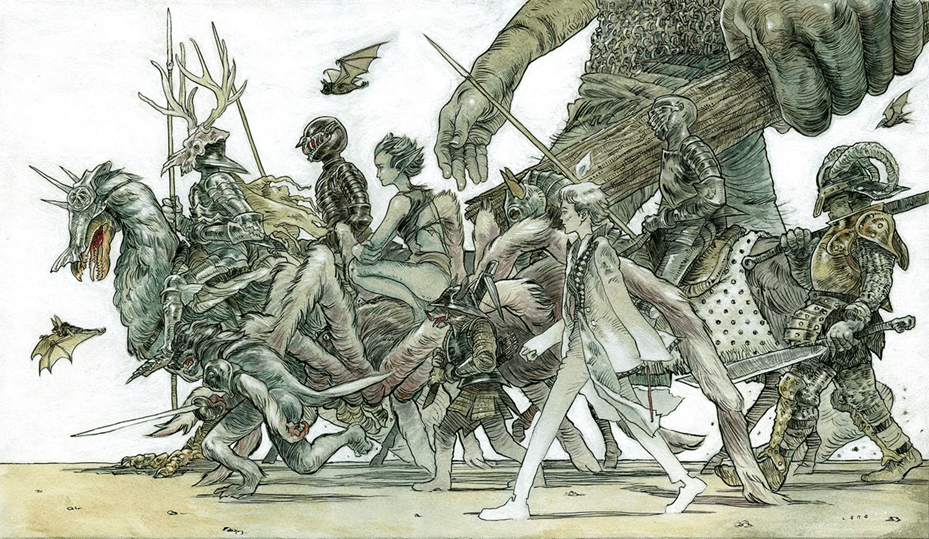
Picture by Elliot Lang, via Scientific American magazine

It seems needless to say—this is a story-telling blog promoting a series of stories I’ve written or am in the process of writing after all—but stories hold significant meaning in our lives. Think about this though, for this idea is multifaceted. We don’t only consume the stories written for us in fictional books, we also consume the stories of those around us: our family and friends, people we find fascinating in the media, global stories that alter modern lives. What’s more, we tell our own stories. Stories that we not only shape, but that shape us in return.

Think of the last time you had a job interview and you were asked why you wanted the position and what you were hoping to accomplish (long-term) by holding the position. In other words, what was your story up to that point and what were you hoping for it to be going forward. Answering this question is no small feat—it can be daunting to put all your past decisions and future uncertainties into a connected, fluid narrative, especially when you don’t and can’t know how your own story will end (besides the very obvious period at the end of everyone’s last sentence of life).

But therein lies the magic of story. While challenging, crafting a narrative that fits together all the disparate pieces of your life—a narrative that you have the power to craft and choose as you please—shapes how you view your own life and how you choose to proceed with this knowledge, thus shaping your future. In fact, a recent Scientific American article titled “To Lead a Meaningful Life, Become Your Own Hero,” suggests doing just that by utilizing the now infamous Hero’s Journey model (a timeless model first posited by mythologist and writer Joseph Campbell).

Jumping back to the interview example, let’s say you’re interviewing for a managerial position but you’ve never held such a role. Utilizing the model, you cast yourself as the protagonist—the hero—who embarked on a knowledge quest (got your Bachelor’s in Leadership for Justice and Equity), overcame many challenges (worked at a non-profit and ran a student organization all while maintaining a solid GPA), had help from allies far and wide (professors, mentors, counselors, friends, and yes, even your fat housecat who you ran presentations by), and discovered the Holy Grail (really liked that one class you took in sophomore year on Organizational Management and decided to take a dive), all on a quest to save the world (in this case, to create more sustainable communities and to empower people through your leadership) (Scientific American, 2023). A narrative that, given the right amount of reflection, can really boost your purpose in life and can give you an edge when it comes to job attainment.

All this to say, stories can be powerful tools. We learn from others through their stories (what to do and, often, what not to). We learn about ourselves and our own unique journeys through our own stories. And we shape both the meaning and the direction of our own lives by the combination of stories we get told and those we create.

But it’s important to note that the wrong stories can also lead us astray. In The Story Paradox (Scientific American, 2023), author Jonathan Gottschall warns that stories and even attachment to certain stories, whether self-generated or not, can trap us in beliefs or even roles that do not serve us. For example, strictly adhering to the justice trope and believing that good will always triumph can blind us to realities that regardless persist around us. We may believe that those who deserve to win a position in an upstanding career or into the school they worked so hard to get into will. But the reality is that many deserving people don’t always get the things they want. Systemic barriers and injustices can impede equitable advancements, giving privileges to those who aren’t always deserving and taking away from those who might be. This is an everyday reality that a story alone cannot change, I don’t care how powerful.

Another example would be the stories we tell ourselves about our seeming failures and inability to achieve going forward. Perhaps we missed opportunities we believe are necessary to achieving a job position now or we seriously miscalculated someone’s demeanor during that one job interview and made the worst possible joke and now think we aren’t fit to be seen in public again, let alone to hold a position in leadership. The stories we tell ourselves about, well, ourselves, can have the power to make or break our successes. So we had better reflect deeply and consider the outcome we want to aim for.
Writer Diaries #1:

Humble Beginnings…

Photo by Aaron Burden on Unsplash

Having resolved to blog regularly, I thought I’d keep track of something that could prove useful in future (not just for myself, but perhaps for anyone else out there who finds themselves at the bottom of a very steep mountain range in which writing regularly might be the first hurdle and the last having something to do with managing thousands—millions (?)—of screaming fans in Rowling-esque fashion).  Namely, I am keeping track, starting now, of my writing journey. Granted I have missed the last decade in terms of blogging, but even though I have been writing since an early age, I have yet to be published and reach an audience and thus am as far away from the top of the mountain as anyone else who is just starting out. (Just to be clear, my goal isn’t necessarily to have thousands or millions of screaming fans, though that might be nice if it were to happen at all.)

So, where am I currently?

Well, if you have been exploring here on my website at all, you might notice that I am in the process of writing a novel (actually, as of this blog, I have finished it and am searching for agents in which to send it to). This is my first completed novel (and the first chapter can be read right here).

As this book is not a standalone, I am also in the process of writing the second book and planning the next two—enough work all on its own. But, as I have researched more and more about the scary publishing world, I have come to the conclusion that having a too-large first novel and being a newbie that no one knows anything about is going to make it very hard to get traditionally published. Rather, it is highly advised by many sources to have been published to some lesser degree by a literary magazine (or two or three) beforehand.

Which means short stories.

I have written several in the past (short stories, that is), one for this website and the series I am working on (which can be found here); I have even sent a few into some contests, but again, have never been published.

Well, long story short, I am taking a second crack at it. And let me tell you, I have never had such bad writer’s block in all my life. Granted I am juggling a lot, but my schedule supports time for writing, I have been writing regularly each day for the last few years or so, and I have read extensively (and plan to continue).

So why the trouble, especially as I have written shorts before?

I think it’s to do with taking that first and serious step forward, toward publication. I am no longer writing just for myself. I am hoping that my shorts, and by extension, my novels, will begin reaching audiences. And the first of those audiences is the hardest. For my novel to have a better chance at traditional publishing, I will likely need some credits from having published short stories. And in order to get those published, I need to win over the editors of such contests and magazines with original, breathtaking, and cleverly written shorts.

Not such an easy task.

I am feeling a bit overwhelmed here, at my start. I know I can’t expect such perfect stories to just flow right out of me, especially in the beginning, especially when I’m worrying about what the editors are going to think, especially when I haven’t been writing shorts for some time.

Take a deep breath, I tell myself. And I always do. But deep breaths don’t win contests!

Actually, they just might. After a serious bout of writer’s block that hit me so hard last week I was struggling with work on my novel (a job that generally comes easy since I am so in-tune with my characters and that world), I took a day off from writing and decided to do something I hadn’t done in a while: I took my dog and my board out to the park and I played. I also took the weekend to read short stories, to fill my empty tank back up to full with ideas and inspiration. I had so much fun during all of this, that I didn’t even worry about my not being able to write or come up with the perfect story and the perfect surprising character developments.

And come Monday, I had new ideas for the short story that I was stuck on. The writing started out slow, but it began to pick up and I am now much more confident that there is something I am trying to say with this piece. I have simply to write it, to chip away the excess, and to see for myself.

The publication and the wins will come, with time I think, practice, and when I am ready (just as they do for anybody who sticks it out in this world).

So if you are feeling overwhelmed by the journey ahead, uncertain if these hurdles are passable, take heart, for I have been there as well (I still am). And so have countless writers before us. I think the most important thing is to keep moving forward, keep writing. Day by day. Don’t worry about how good you are, just let the stories excite you and the characters take you places you’ve never gone (and this is me telling myself this advice, because sometimes I forget).