A Welcome to any and all castaways out there… to people who don’t fit in boxes and can’t be summed up by covers, that is…

Writer of the magical, grotesque, and everything in between
A Welcome to any and all castaways out there… to people who don’t fit in boxes and can’t be summed up by covers, that is…
In the coming months I’m attempting to overhaul this website: my own domain, an updated mailing list that actually works, a new author related email (and not the one I use for personal use); who knows, maybe even a professional looking photo so you all know I’m not a robot. Potentially I can get started with sending actual content to my subscribers at a set time each month. Adding other shorts from the wonderful world of the Treehouse Castaways (many have been shelved over the years). The possibilities are endless.
I’m also in the process (finally!) of publishing the first book in the series, as mentioned in my last post. Part of the reason this wasn’t done a lot sooner (as in, back in 2019 when I finished it) is because I was hoping to shoot for traditional publishing. I have since changed my mind and decided to go the route of the self-published because this series is far too important to have other people telling me what to change and how to handle it.
It’s also quite long and, being a first published novel, very unlikely to catch the attention of major agents and/or publishers. That’s okay. I’m slowly working on its visibility. In the meantime, I’m busy writing the second book (first draft is complete but there are some very heavy edits ahead), updating this here website as mentioned, and learning the ropes of self publishing.
I also put off publishing because I honestly am not much for self-promotion, marketing – basically the logistical side of being a writer. It took me many years to get over that hurdle and return now ready to jump into it. I also had many doubts that anyone really wanted to read it. I’ve reread it multiple times in order to keep track of subplots and content needed for the next few books, and I can say I love it so much every time. But I also wrote it for me, for anyone like me who’s never really fit in anywhere.
So even though many people around me (including those potential agents and publishers) don’t really understand the series or see its value, I know that’s because it’s not for them. It’s for others out there like me. Maybe that means there are a lot less people that will be interested in it. But it also means that for those whom it finds, the value will be infinite.
In that vein, my next steps with publishing include hiring a professional artist to give it a cover that brings the magic of the book to life. I’ve been halted here at this step since last year because this is a financial hurdle I’ve yet to overcome. I don’t often speak about my real-world struggles here (I prefer this space to be for the series and any themes that are relevant), however, this is the reality of our world, especially nowadays. Many factors – identity, systemic barriers, financial precarity, real-world inequities – can have a major impact on whose voice gets heard, and whose doesn’t.
This is a story for people like that, so I want to give it as much chance to fly as possible. I created a GoFundMe in an attempt to raise enough money to pay for a real (not AI) artist that can give this series some justice – give it a fighting chance on shelves with books from authors with more resources than me. If you have read this far and have any interest in supporting this series, I would be greatly appreciative and will add your name to the acknowledgements page of the first book in the series. You can find out more here at my GoFundMe Campaign on how to support. Even if you can’t support right now, I appreciate you sticking around to hear my story.
More to come in the coming weeks!
I’m back! With only slightly modified content… But I have some fun updates as well. I’m currently in the process of getting my first Treehouse Castaways book published. This would have happened a lot sooner – for anyone that’s been following this site for some time, you might know I finished the first book in the series back in 2019. The reason I haven’t published it since then is… complex, to say the least. But it’s finally happening! At least, once I have enough money for the cover art. Wah wah.
In the meantime, I decided to upload a revised version of chapter one of the first book for preview because I am a very finicky, artist-type writer and never feel like my work is done. The first chapter also carries a LOT of weight for this epic fantasy series, so it makes sense that I never felt satisfied with it. I am keeping the original chapter on this website, so for anyone that’s curious to see the changes (I swear they’re there!), they can have fun hunting for them between the two. Think of it as a game that no one asked for.
I think it’s important to preserve older edits because it shows the progress not only writers make as they’re learning the craft, but the journey a story takes on its way to completion. Like my main character, Elijah Hawthorne, it’s a coming-of-age arc that never gets old. Anyway, for those of you interested, here is the updated version of Chapter One: Into the Closet (no, this has nothing to do with suppressing queerness).
It seems needless to say—this is a story-telling blog promoting a series of stories I’ve written or am in the process of writing after all—but stories hold significant meaning in our lives. Think about this though, for this idea is multifaceted. We don’t only consume the stories written for us in fictional books, we also consume the stories of those around us: our family and friends, people we find fascinating in the media, global stories that alter modern lives. What’s more, we tell our own stories. Stories that we not only shape, but that shape us in return.
Think of the last time you had a job interview and you were asked why you wanted the position and what you were hoping to accomplish (long-term) by holding the position. In other words, what was your story up to that point and what were you hoping for it to be going forward. Answering this question is no small feat—it can be daunting to put all your past decisions and future uncertainties into a connected, fluid narrative, especially when you don’t and can’t know how your own story will end (besides the very obvious period at the end of everyone’s last sentence of life).
But therein lies the magic of story. While challenging, crafting a narrative that fits together all the disparate pieces of your life—a narrative that you have the power to craft and choose as you please—shapes how you view your own life and how you choose to proceed with this knowledge, thus shaping your future. In fact, a recent Scientific American article titled “To Lead a Meaningful Life, Become Your Own Hero,” suggests doing just that by utilizing the now infamous Hero’s Journey model (a timeless model first posited by mythologist and writer Joseph Campbell).
Jumping back to the interview example, let’s say you’re interviewing for a managerial position but you’ve never held such a role. Utilizing the model, you cast yourself as the protagonist—the hero—who embarked on a knowledge quest (got your Bachelor’s in Leadership for Justice and Equity), overcame many challenges (worked at a non-profit and ran a student organization all while maintaining a solid GPA), had help from allies far and wide (professors, mentors, counselors, friends, and yes, even your fat housecat who you ran presentations by), and discovered the Holy Grail (really liked that one class you took in sophomore year on Organizational Management and decided to take a dive), all on a quest to save the world (in this case, to create more sustainable communities and to empower people through your leadership) (Scientific American, 2023). A narrative that, given the right amount of reflection, can really boost your purpose in life and can give you an edge when it comes to job attainment.
All this to say, stories can be powerful tools. We learn from others through their stories (what to do and, often, what not to). We learn about ourselves and our own unique journeys through our own stories. And we shape both the meaning and the direction of our own lives by the combination of stories we get told and those we create.
But it’s important to note that the wrong stories can also lead us astray. In The Story Paradox (Scientific American, 2023), author Jonathan Gottschall warns that stories and even attachment to certain stories, whether self-generated or not, can trap us in beliefs or even roles that do not serve us. For example, strictly adhering to the justice trope and believing that good will always triumph can blind us to realities that regardless persist around us. We may believe that those who deserve to win a position in an upstanding career or into the school they worked so hard to get into will. But the reality is that many deserving people don’t always get the things they want. Systemic barriers and injustices can impede equitable advancements, giving privileges to those who aren’t always deserving and taking away from those who might be. This is an everyday reality that a story alone cannot change, I don’t care how powerful.
Another example would be the stories we tell ourselves about our seeming failures and inability to achieve going forward. Perhaps we missed opportunities we believe are necessary to achieving a job position now or we seriously miscalculated someone’s demeanor during that one job interview and made the worst possible joke and now think we aren’t fit to be seen in public again, let alone to hold a position in leadership. The stories we tell ourselves about, well, ourselves, can have the power to make or break our successes. So we had better reflect deeply and consider the outcome we want to aim for.
A Return! and a blank sheet of paper…

I went back to school.
Okay, okay, that’s not the only reason I haven’t been on here in like three years. I let myself think my blogging was useless and my voice was not something anyone cared to hear. I have since come to my senses. So, two moves, a pandemic, and three breakups later (also, several huge identity crises) and I am back! I think—I hope! We’ll see, I guess, because I am currently applying to grad schools and might be a tad busy in the years to come. But fret not, I still managed to finish the first draft of my second book (book two of the series) and have recently been rereading in preparation for the first few major edits (the hardest part of the whole process, yes, but an exciting part nonetheless). I’m excited, anyway. Less overwhelmed than I was the last time I wrote an entry like this one. That’s because I spread my focus to other areas of my life, got some perspective, and remembered, through some much needed time away, how much I love writing and how much I—especially—love The Treehouse Castaways.
To bring you up to speed with my writing journey: I never stopped, but I haven’t been at it as much as I once was. There have been large gaps between writing bouts. Once, in an especially bleak winter, I even lost an entire year’s worth of work and nearly gave up on my story (to say nothing of my life). But I managed to—barely—get it back by scrounging every ounce of courage I had and scouring the internet for tips (never underestimate the power of the internet).
I have not kept up with short stories as much as I (probably) should have, but have written a few since last I set down an entry here, discussing just such a thing. I took a creative writing class at my community college, the semester before I started at UC Davis, and this pushed me to complete some pieces, which I am planning on sharing on this website once I make a new page for it.
Most importantly, I finished writing the first draft of book 2 (of The Treehouse Castaways series) and, recently—as in today—finished the reread and will be planning my next attack (that is, the first edit phase) in the days/weeks to come. It’s a very busy next couple of weeks for me with a talk at UCLA coming up, grad school applications, several classes, my brother and stepmom visiting California for the first time since they left back in 2016. So we’ll see how much I can get done. But I don’t plan on ever stopping, so you can be assured I’ll get to it all eventually!
Lastly, I wanted to make a special note for anyone out there who might be struggling with something I often have. My long sabbatical from this blog, indeed from this website, has come along with some special insight mostly gained whilst pursuing other interests, other successes or failures (depending upon how you look at it), and other areas of life): our voices matter. No matter who you are or what you’ve done or where you’ve been or where you’re going. We all have something important to say and something important to share. And I guess you never know who you might touch, who might be listening and needing your very specific insights.
I did not always know this, obviously. And I took for granted that I was in a better position to use it (have had consistent access to computers and the internet, am educated to the point of literacy, don’t have people threatening me when I do practice sharing my voice) than some. But I needed to learn to use it, and to recognize that I both can and should, at least to the best of my ability. And so can/should you (if you can, of course—not everyone has the same privileges). But if you are like I was, and don’t think you have anything important to say, just know that you do. And you can learn to do anything, including share your very special way of seeing the world.

Let’s face it, writing can be tricky. There’s first coming up with an idea for a story or piece that is interesting enough for you to dedicate the next several hours/weeks/months/years to. There’s then the process of developing the idea, coming up with scenarios or arguments or characters (depending upon your project) to support the idea. Then there’s the writing. And the rewriting. And yet more rewriting. Editing while writing and reminding yourself you’re still wearing the writer’s hat and would Mrs. Editor kindly wait outside until summoned?
Sometimes the writing doesn’t measure up to the stuff you love to read or to the ideas you had in your head. There’s a lot to balance and a lot that can go wrong. And there’s no sure-fire way to get better at any of this but simply writing–for hours and hours, mind.
There are, however, some ways to speed up the process.
Here are eleven less obvious ways to become a better writer:
1. Read blogs for writers
There are probably thousands of them out there, but I will offer some criteria that has helped me. Find blogs that offer content that both encourage and assure you as a writer and gives good advice on things such as craft and the process of writing. A good one I have found very useful over the years is the Writer Practice, but I also enjoy Live Write Thrive. Definitely check those out if you can. They have wonderful advice and resources, as well as contest, communities, and classes.
2. Don’t just read literature, study it!
This holds for classics, of course, but it also holds for any other reading material out there. It is very important to read the sort of stuff you want to write, but it can be equally valuable to read things that don’t have much to do with what you write about, so long as they interest you and can add to your perspective (I’ve used psychology books, as an example, to aid in my understanding of my characters). The best way to study such things is to read slowly and to absorb every detail: how is/are the book/chapters/paragraphs formatted? how does the author’s voice or POV character add to the events of the story? what narrative devices are being used to enhance the drama of the events being told? Ask a lot of questions, don’t be afraid to reread sections both that you didn’t understand and that you loved, and constantly reflect on ways you could use these finding to better your own writing. You want to find out how this particular author pulled off what they did by peeking behind the curtain, peering into the folds that they have craftily (or maybe not-so-craftily) hidden.
3. Brush up on your mythology
This may seem strange, but many of you fantasy writers may already be familiar with a little something called the Hero’s Journey which is based off of hundreds, maybe even thousands, of myths from all over the world that the late, great Joseph Campbell compiled to highlight the patterns in each of them. Even if you’re not a fantasy writer, or someone similar (sci-fi, horror), you may benefit from knowing a bit more mythology. These sorts of tales, which tell of fantastical, sometimes illogical, instances without a lot of explanation, convey something that all writers must do well in order to pull off a good story: touch upon the awe that is story; it is the same awe of childhood, in fact, that made many of you want to be writers in the first place. Plus, it pays homage to our roots as writers. Every writer is a storyteller, no matter what kind. At the end of the day, that is all we are doing, telling a tale, spinning a yarn.
4. Read books on writing by other authors who are better than you
This one may seem obvious, but I have met many other writers who don’t do this very useful thing. At all. These same writers are the ones that complain to me about how no one understands the message they were trying to convey through the death of that one character or how they aren’t winning writing contests; well, my answer to them, if they were to listen, would be to read authors who have successfully done both of those things; better yet, to read books they’ve written about writing. There’s not much else to say (except that Stephen King has a very good one called On Writing and you should check it out).
5. Develop a habit of writing daily and experiment until you have discovered your own rhythms
This is another more obvious one, but again, I know a lot of writers that don’t do this. I get it, we all have busy lives. There’s jobs and kids and cat barf that need tending to. But if you are serious about writing, you will want to do this for yourself. In fact, it may be the only thing you can do consistently in the beginning when you can’t afford classes or expensive conferences, even if you can only sit down to do it for fifteen minutes a day. Obviously, shoot for a daily word count if you can (my personal amount is 1500 words and can sometimes be a real challenge), or some other type of goal (finish one scene a day or figure out your deuteragonist’s motive in the first half of the book). But the most important thing is consistency. If you show up each day around the same time, you are actually training yourself to be creative, even on days you don’t want to be, and that fickle Muse is much more likely to turn up because it knows exactly where you’ll be. You’ll want to play around with different times at first to see when you work best. Maybe it’s early in the morning, maybe late at night. Maybe you like to work at different times on different days, or have to out of necessity. Finding your personal rhythm is as important as finding and developing your voice as a writer. And all great writers have them.
6. Challenge yourself with strange practices
There are many of them out there, some just a google search away. But you can come up with them yourself as I have: write a story backward (that is, from the end to the beginning); make a story generator by writing different settings (i.e. dessert, royal court, haunted space station) and concepts (i.e. orphan told he’s a wizard) on separate pieces of paper and put them into a hat or bowl and draw at random (keep the setting and concept separate so you can draw one of each), then write a story based off of the draw (i.e. a detective story in a submarine); write a story using the first sentence you see while walking around somewhere in your town as the first sentence. The point with all of this isn’t necessarily to write an entire novel or what-have-you based on these practices (some of them would probably be pretty terrible) but to see how they take you away from your normal patterns and force you to try new things as a writer, which is something you always want to be doing.
7. Learn about story structure (this is mostly for you fiction writers, but there are some structures out there—setup, response, attack, resolution—that could help you other writers build intrigue in non-fiction pieces)
There are dozens of supposed story structures and, depending upon your preferences or beliefs as a writer, they can be very useful to you as you are drafting and crafting your piece. None of them are the “right” way to write a story. Some people will say that the three-act structure is the only way or that a pinch point absolutely must come at the twenty-five percent mark, but this is all hogwash in my opinion. I believe that the story itself dictates the structure. So experiment with different kinds, forgo them altogether and see what you get, but most of all, listen to your story, it will tell you what you need to do.
Also, The Story Grid Podcast, for those of you who don’t know, is a great place to begin exploring story structure.
8. Learn from stories in other mediums
Dance, film, music, fine art, video games, anecdotes your uncle tells at Thanksgiving dinner are all filled with story. Sure, there may not be words there in some cases, but there is definitely some sort of narrative flow, a beginning, middle, and end. You will have to step out of your writing box to find it. You will have to develop other perspectives. But it is a great way to invite some creativity into your storytelling methods that may have gotten lost while you were writing through a bout of writer’s block or editing a particularly terrible first draft. It could give you ideas, too, on ways to break the mold of story structure and write something entirely new. Who knows.
9. Follow a favorite author on their website and keep up with their content
This is a great way to see how a paid author does everything from running a website to conducting their own meet-and-greets. You can learn so much more than just craft and writing routines from them. It’s best to pick an author (or several) that updates often, or at least sends out a newsletter or blog every once in a while. The best one I have found is Brandon Sanderson who has written dozens of books, including several very fat, very in-depth, series, and also updates his fans on his writing projects with progress bars (I mean, how dedicated do you have to be). He even has a whole page of resources for people like me who want to learn about writing specifics (like magic systems) and has a video series on Youtube of him teaching classes at a real university that’s completely free!).
10. Watch Youtube channels geared specifically by writers for writers
Again, there are a bunch of them out there. You’re going to have to be discerning here, because some of them can waste your time. I like to watch ones that focus not so much on craft as on the mechanics going into the story, i.e. magic system techniques, writing about war or characters that are not human. A lot of these youtubers focus on things like writing about race or varied sexual orientation or how best to portray mental health problems in characters. The millennial generation has gotten really good at inclusivity in their writing and portraying a wide variety of characters (and it’s about time we have more of that), but there are ways that this can be done not so well and, well, downright terribly. It’s good to study up on such techniques as often as possible so as to do right by the types of people you are trying to include, and the visuals such media as Youtube utilizes can be particularly helpful in aiding you here. Two Youtube channels I am keen on myself are Hello Future Me, which focuses on fantasy and sci-fi writing tactics, and JustWrite, which breaks down film and television stories and to aid in understanding storytelling.
11. Whatever you’re inclined to do as writer, do the opposite
This doesn’t have to be all of the time, but if you are having a particularly hard time some days, why not try writing in a genre or style that is the complete opposite of yours? That way, if you’re bad, you know it’s because you never writer this way and can blame something other than yourself. If you write non-fiction, for example, maybe you could try writing fiction. If you are a panster, maybe you could try outlining a piece before writing it. And if you only write novels, maybe you could try writing a flash fiction piece. It’s good to try new things and even better to get good a various styles and modalities of writing.
12. (surprise!) Here’s an additional tip that bears repeating—write, write, write, if nothing else. It’s not unconventional (unless all you ever do is talk about writing), but it is the single most important thing any writer can do. More important even than reading a classic or taking a class. Because it is here that you must find your own footing. It is here that you learn what type of writer you really are and struggle and fight and yes, sometimes cry, write on the page, no training wheels, no more dreaming and wishing and thinking about. Just plain old-fashioned writing. Writing when you’re not yet a good writer because, guess what, it doesn’t matter. You took the time to sit down and write. That’s the difference between a writer and, well, not a writer.
Humble Beginnings…
Having resolved to blog regularly, I thought I’d keep track of something that could prove useful in future (not just for myself, but perhaps for anyone else out there who finds themselves at the bottom of a very steep mountain range in which writing regularly might be the first hurdle and the last having something to do with managing thousands—millions (?)—of screaming fans in Rowling-esque fashion). Namely, I am keeping track, starting now, of my writing journey. Granted I have missed the last decade in terms of blogging, but even though I have been writing since an early age, I have yet to be published and reach an audience and thus am as far away from the top of the mountain as anyone else who is just starting out. (Just to be clear, my goal isn’t necessarily to have thousands or millions of screaming fans, though that might be nice if it were to happen at all.)
So, where am I currently?
Well, if you have been exploring here on my website at all, you might notice that I am in the process of writing a novel (actually, as of this blog, I have finished it and am searching for agents in which to send it to). This is my first completed novel (and the first chapter can be read right here).
As this book is not a standalone, I am also in the process of writing the second book and planning the next two—enough work all on its own. But, as I have researched more and more about the scary publishing world, I have come to the conclusion that having a too-large first novel and being a newbie that no one knows anything about is going to make it very hard to get traditionally published. Rather, it is highly advised by many sources to have been published to some lesser degree by a literary magazine (or two or three) beforehand.
Which means short stories.
I have written several in the past (short stories, that is), one for this website and the series I am working on (which can be found here); I have even sent a few into some contests, but again, have never been published.
Well, long story short, I am taking a second crack at it. And let me tell you, I have never had such bad writer’s block in all my life. Granted I am juggling a lot, but my schedule supports time for writing, I have been writing regularly each day for the last few years or so, and I have read extensively (and plan to continue).
So why the trouble, especially as I have written shorts before?
I think it’s to do with taking that first and serious step forward, toward publication. I am no longer writing just for myself. I am hoping that my shorts, and by extension, my novels, will begin reaching audiences. And the first of those audiences is the hardest. For my novel to have a better chance at traditional publishing, I will likely need some credits from having published short stories. And in order to get those published, I need to win over the editors of such contests and magazines with original, breathtaking, and cleverly written shorts.
Not such an easy task.
I am feeling a bit overwhelmed here, at my start. I know I can’t expect such perfect stories to just flow right out of me, especially in the beginning, especially when I’m worrying about what the editors are going to think, especially when I haven’t been writing shorts for some time.
Take a deep breath, I tell myself. And I always do. But deep breaths don’t win contests!
Actually, they just might. After a serious bout of writer’s block that hit me so hard last week I was struggling with work on my novel (a job that generally comes easy since I am so in-tune with my characters and that world), I took a day off from writing and decided to do something I hadn’t done in a while: I took my dog and my board out to the park and I played. I also took the weekend to read short stories, to fill my empty tank back up to full with ideas and inspiration. I had so much fun during all of this, that I didn’t even worry about my not being able to write or come up with the perfect story and the perfect surprising character developments.
And come Monday, I had new ideas for the short story that I was stuck on. The writing started out slow, but it began to pick up and I am now much more confident that there is something I am trying to say with this piece. I have simply to write it, to chip away the excess, and to see for myself.
The publication and the wins will come, with time I think, practice, and when I am ready (just as they do for anybody who sticks it out in this world).
So if you are feeling overwhelmed by the journey ahead, uncertain if these hurdles are passable, take heart, for I have been there as well (I still am). And so have countless writers before us. I think the most important thing is to keep moving forward, keep writing. Day by day. Don’t worry about how good you are, just let the stories excite you and the characters take you places you’ve never gone (and this is me telling myself this advice, because sometimes I forget).
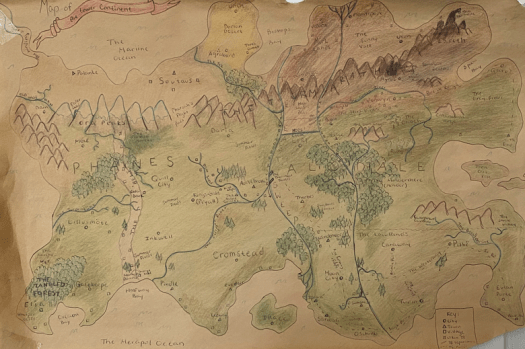
The Treehouse Castaways. It’s been ten plus years since the idea first lodged itself in my brain: I was fourteen and hardly knew what I was taking on at the time. Indeed, the story has grown a lot since then (as well as changed in certain ways), as I have. But like my characters, who are only a little younger than I was then, I like to think that I grew and learned in ways that informed my writing of them and of the story, which is as close to my heart as anything can be. Without the incubation period and the long years of struggling through structural issues, learning how to show not tell, learning to put together something of this size and complexity, I would not have the story that I do now.
So what is this story all about, you must be asking. I’ve kept it under wraps long enough, I should say. Here’s what the Treehouse Castaways is all about:
A boy. A cursed lake. A city of monstrous trees where secrets and magic are housed within them.
But there is so very much more than that. This story came together, like I said, over a ten-year period where I veritably absorbed everything I could through a lens of “how can I make this even bigger and better.” I owe so many great works out there—be they novels, television series, animes, film, graphic novels, video games—a debt of gratitude for their fanning the inspiration inside me.
The first work that planted the initial seed is a little story called Peter Pan—I think you know the one. A boy who refuses to grow up. A magical land that stands outside of time. Pirates. Lost boys. Fairies and pixie dust and children that can fly. This story has everything. I like to think that the Treehouse Castaways takes away some of this magic and transforms it into something fresh, something with the heart of Peter Pan—with the heart of never growing up—but something that’s never been done before.
The Treehouse Castaways is fantasy, coming-of-age, YA goodness (think if Peter Pan became a magician in a very Harry Potter-esque manner, and Neverland a place of enormous treehouses where, instead of being filled with pirates, continued to fill with lost boys—and girls—who spoke to trees and took in every manner of creature out there). The Treehouse Castaways is about, at first, not belonging. These are true castaways—people who don’t fit anywhere, seemingly. Although it’s not without its hope. Because the Treehouse Castaways is also about friendship and family and finding connection. It’s about finding meaning in a world that seems devoid of it. It is at once informed by childhood and whimsy, but also by the very truths that dissolve it: war and loss and isolation.
The Treehouse Castaways is at once an adventure story of exploration and discovery: this is important. These were the sorts of stories that kept me going as a child, that filled me with hope and awe and gave me joy to be alive. It’s also important that the characters with which we experience this story are children. There is something to be said about the innocence and fresh perspective that a child brings to everything they encounter. There is more danger and higher stakes for a child going through a trial than there would be for an adult, yet it shows the tenacity of the human spirit, even at such tender ages, when they still overcome them. And it shows other children (even the eighty-year-old ones) that anyone is capable of resourcefulness, courage, and many great things besides.
Of course, you can’t have a fantasy story without a little magic. Don’t worry, there is plenty of that. Magic breeds mystery, and mystery is at the core of this story. For Elijah Hawthorne, the protagonist, mystery is at the core of his being. For who can know oneself and where they belong without a little trouble along the way?
It’s coming! The first novel in an epic adventure fantasy series, The Treehouse Castaways. Check out the first chapter of City in the Trees, book one of the series!
I am super excited to introduce City in the Trees for an early preview right here. This novel has been baking for some time and I am thrilled to finally let it out into the light (at least partially). For more information, please check out the Coming Soon page where another link to the early preview chapter exists, or message or leave a comment and I will get back to you.
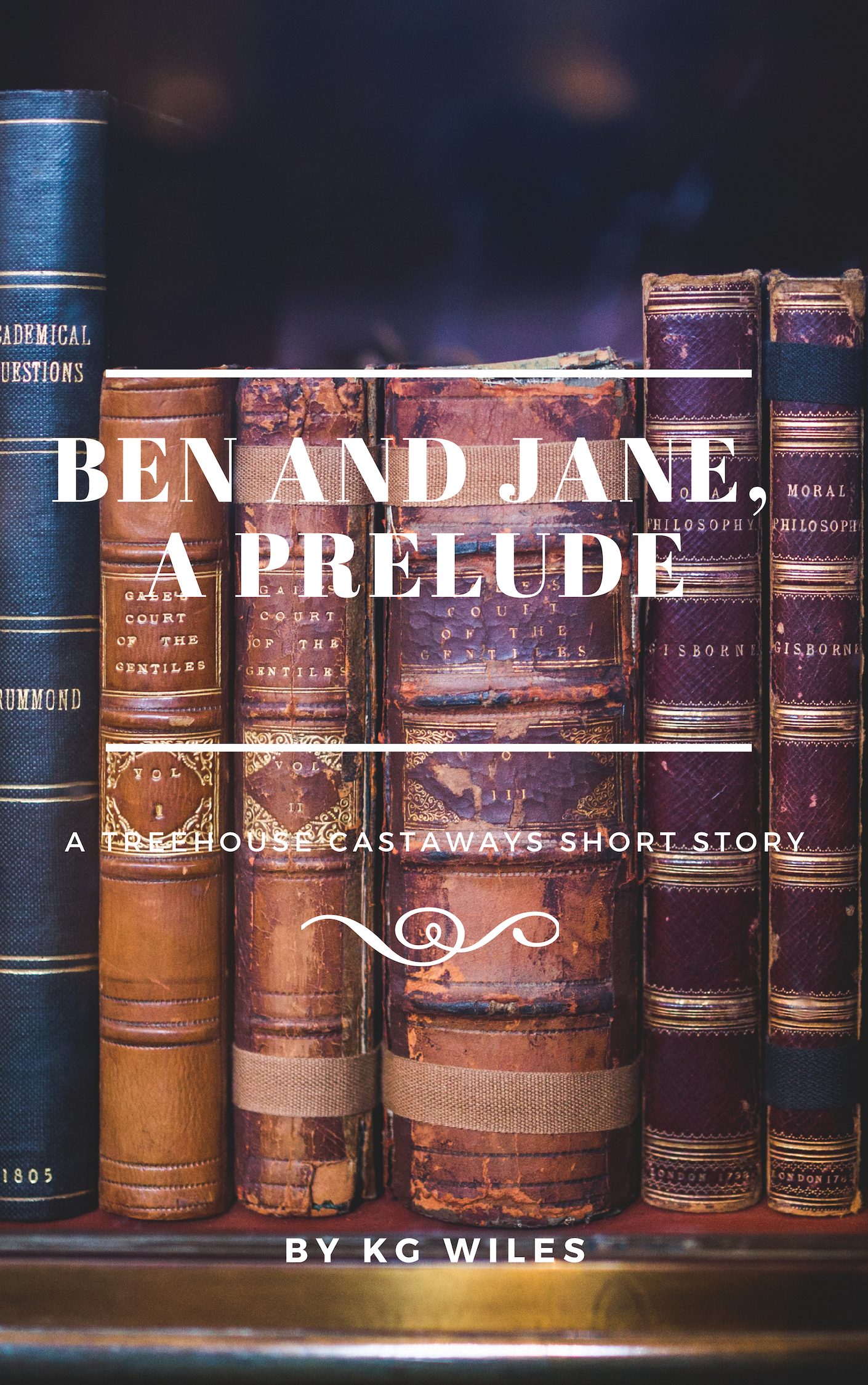
The short tale of Ben and Jane, from the world of the Treehouse Castaways, is finally here. Check out the full story of Ben and Jane, a Prelude here, enjoy, and be sure to leave any comments you have! (And look out for more stories from the whimsical world of the Treehouse Castaways!)
From the world of the Treehouse Castaways comes Ben and Jane, a Prelude… to the rising epic fantasy series coming soon!
Young magicians Ben Hawthorne and Jane Holly are hoping to soon master their magic and become the great sorcerers they know they can be. But when their magic academy is blown to pieces by a band of rogue fire magicians just months prior to their graduation, they aren’t certain where their place in this war-torn world is. It isn’t until Ben’s older brother returns from a secret expedition, with knowledge behind their school’s attacks, that they get their chance to set forth for the first time on their own and to prove what it is they’ve learned during their long years of study. But with adventure and magic always comes danger.
Coming February 7!
 K.G. Wiles